
St. George Public Records Custodians
Open access depends on the record and its keeper. Washington County holds the main land, parcel, tax, marriage, election, and jail systems used in St. George. Utah agencies operate the statewide court, license, corporation, corrections, and vital-record channels. The city keeps municipal business such as permits, council files, police reports, and St. George Justice Court material. A portal may show an index while the official copy still comes from the office.
| Record Set | Keeper | Online Route | Access |
|---|---|---|---|
| Deeds, liens, plats | County Recorder/Surveyor | Property Search, Recorder Viewer, Old Abstract | Public index and instruments, with protected data removed |
| Owner, value, tax facts | Assessor, GIS, Treasurer | County map and tax tools | Free current facts; counter or GRAMA fallback |
| District and justice cases | Utah Courts and court clerks | Xchange | Public dockets; paid web access or clerk channel |
| Birth, death, marriage, divorce | Utah Vital Records, county clerk, health district | Certificate ordering and Archives collections | Recent copies restricted; older series may be open |
| Current jail and state custody | County Sheriff and Utah Corrections | Roster, bookings, offender search | Public status fields, subject to legal exclusions |
| City permits and police files | St. George departments | Selected city forms and apps | Direct request or GRAMA when no index exists |
Government Records Access and Management Act classifications still control each row. Some material is public, while other material is private, protected, controlled, sealed, or expunged. Recent vital certificates have eligibility rules. Juvenile cases do not appear in Xchange. Driver data is not an ordinary GRAMA source. The right route is therefore record-specific, even when several St. George offices share the same county complex.
Accessing St. George Deed Records
The Washington County Recorder/Surveyor indexes instruments that affect St. George land, including deeds, liens, plats, surveys, and related filings. Its current property portal does not publish a verified online start year. That gap matters. Searchers should not treat the oldest item seen online as the first record held by the office. The recorder counter, historical viewer, ownership plats, and Utah State Archives remain valid channels when the main viewer cannot reach the needed year.
The Washington County Recorder page links the live property search, Property Watch, maps, and historical records.
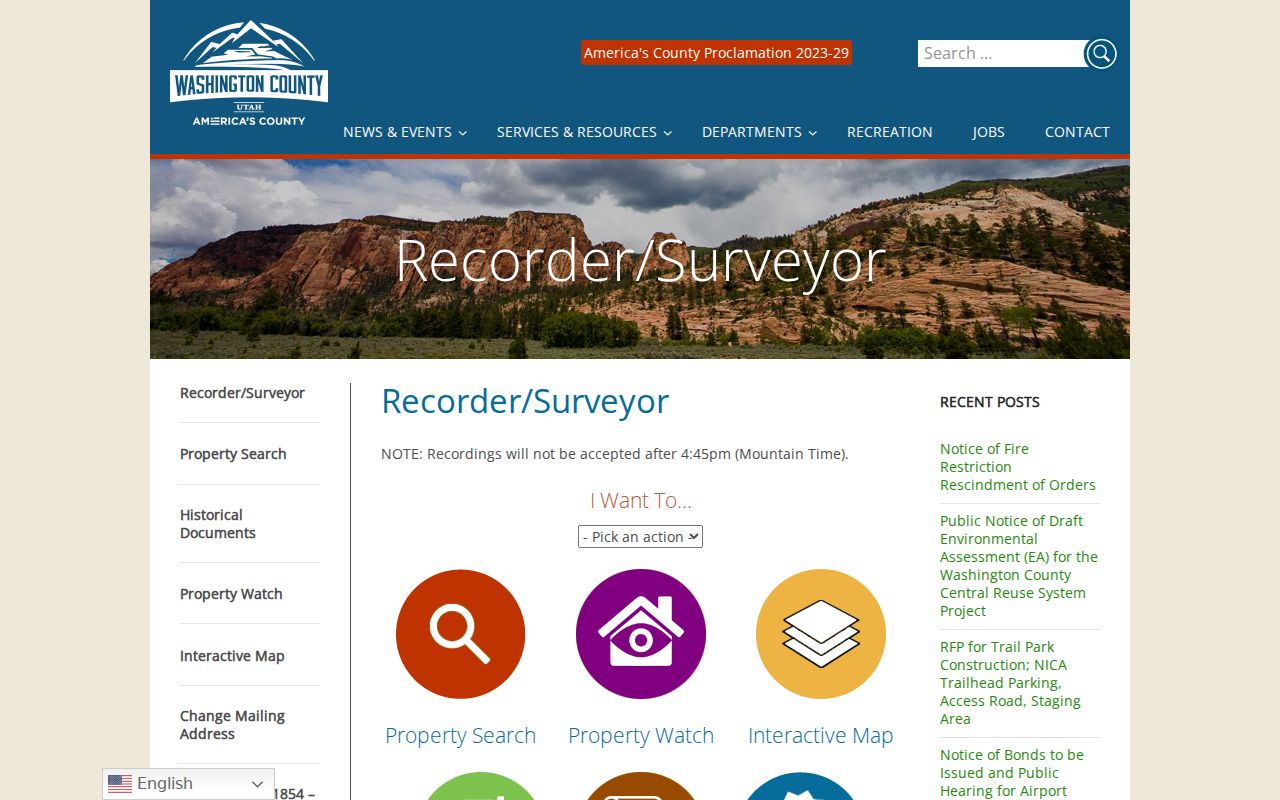
The screen is a route into several county systems, not proof that one database contains every St. George land record.
- Index
- A finding record that points to an instrument. It is not always the document image.
- Certified copy
- A copy authenticated by the custodian for an official use.
- Custodian
- The public office that maintains and answers for the requested record.
- Exemption
- A legal basis for withholding all or part of a record.
Recorded instruments generally require the document type, a legal description, a parcel or tax ID, printed indexed signer names, and a grantee mailing address used for taxation. Those facts help narrow a counter request. They also explain why a parcel screen and a deed are not interchangeable.
St. George Old Abstract Records
Washington County’s Old Abstract spans 1854 through 1992, a 138-year bridge that begins before St. George was founded. It is especially valuable when the modern guest portal redirects, fails to load, or lacks the older title event. The county also offers ownership plats by year. Together, the abstract and plats can place a name in an earlier property chain before the current recorder system takes over.
Start with a parcel or tax ID, then compare the Old Abstract entry with the legal description and ownership plat for the same land. Carry the grantor and grantee names into later or earlier instruments. A grantor conveys an interest; a grantee receives it. The recorder counter at 111 East Tabernacle can help with records that remain in paper, an office viewer, or another historical format.
Note: The Old Abstract date range describes that historical system, not the verified start date of the current St. George online index.
St. George Property Record Geography
Three Washington County functions answer three different property questions. The Recorder establishes ownership instruments, legal descriptions, and acreage. The Assessor values property at full market value as of January 1 and publishes characteristics. The Treasurer handles tax billing, payment history, delinquency, and mailing changes. GIS joins a parcel to its map and layers, but the map itself does not create a title chain. St. George, Santa Clara, Washington City, Ivins, Hurricane, and unincorporated communities also use separately identified address grids, so the city, direction, and ZIP must remain attached to an address.
The Washington County map inventory presents recorder, assessor, zoning, election, aerial, and plat viewers.
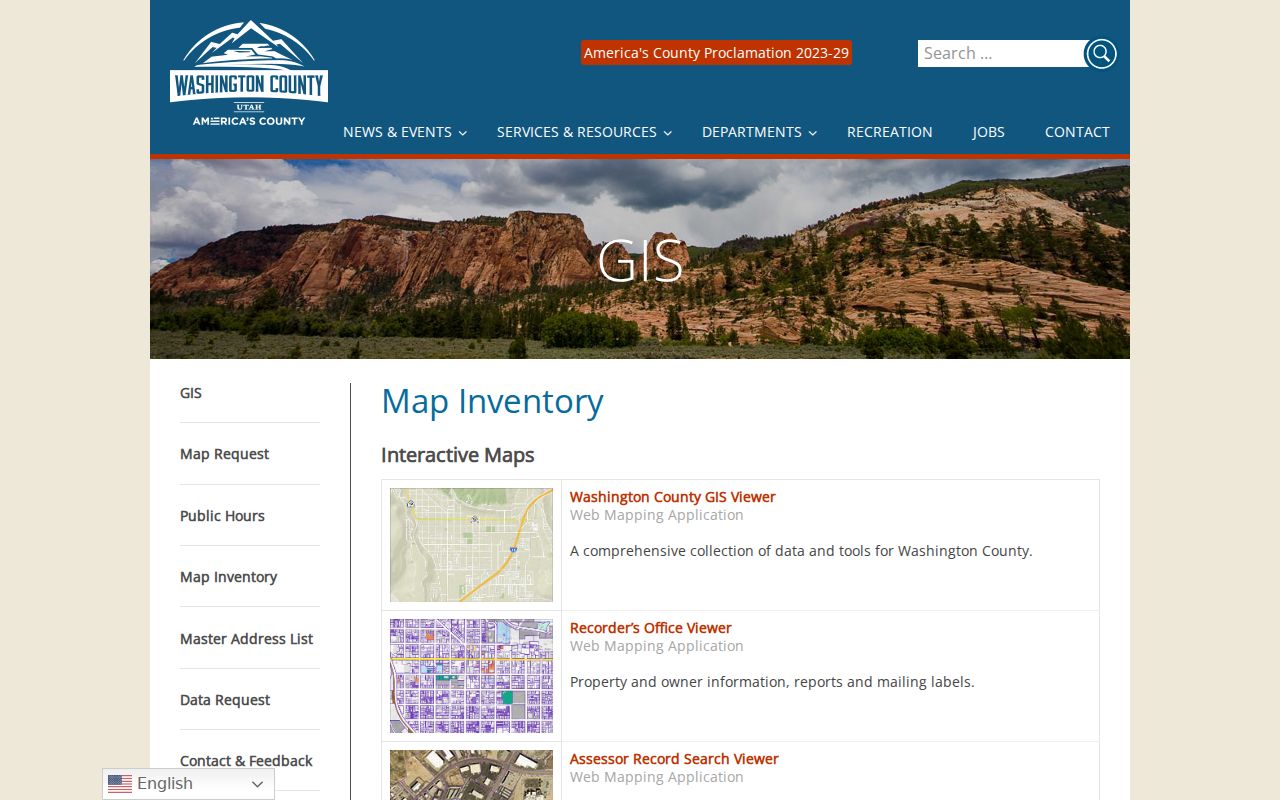
Choosing the viewer by question prevents a common error: treating a tax mailing address as the physical site or treating a GIS tax ID as the land’s legal description.
Keep the identifiers distinct. A situs address is the physical location, a mailing address receives tax notices, and a parcel number is not a legal description.
Searching St. George Court Records
Utah Courts Xchange covers public electronic case information for the Fifth District Court and Washington County Justice Court. Fifth District handles felonies, class A misdemeanors, civil matters, domestic cases, and probate. Justice courts handle lower-level misdemeanors, traffic, ordinances, and small claims. St. George Justice Court is a separate municipal court, so a missing result may call for the municipal clerk or a written court-record request.
The Utah Courts Xchange gateway is the statewide starting point for a public party search.
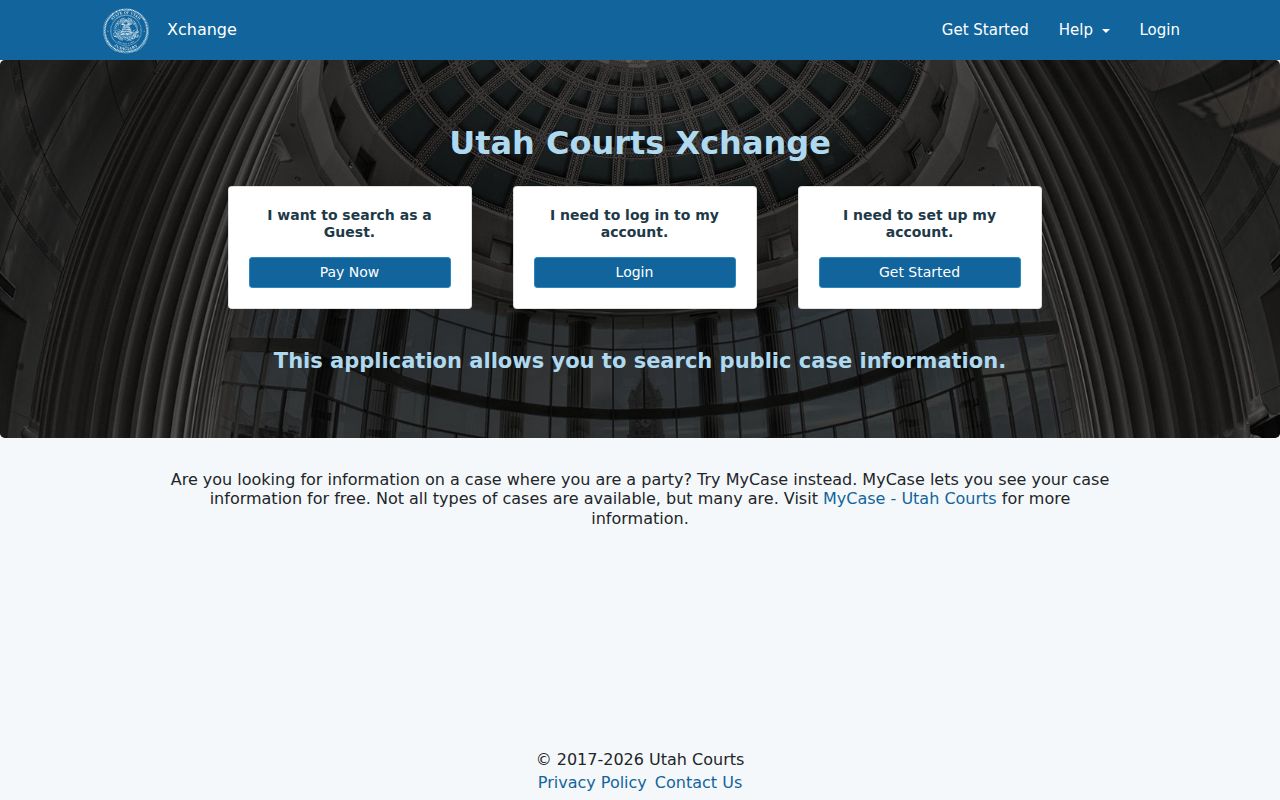
Xchange can return the court, case type and number, filing date, party names and roles, case history, hearings, judgments, orders, and public documents available for purchase.
| Search Field | Entry or Choice | Use |
|---|---|---|
| Jurisdiction | District, Justice, or both | Sets the court level |
| Last Name/Company | Text with * wildcard | Required for a name route |
| First Name | Optional text with * wildcard | Captures spelling variants |
| Scope | State, county, or court | Narrows to Washington County when useful |
| Case Type | Optional selector | Limits the record class |
| Date Controls | Filing, disposition, or judgment | Restricts the time band |
Results cap at 500. A case number is not unique statewide, so include the court when known. District CORIS data is generally complete by the end of 1998, while justice court dates vary. Public district documents filed since July 1, 2010 are stated to be available. If a web result is absent, the courthouse terminal, clerk request, or Archives guide may hold the answer.
St. George Xchange Record Costs
Online court access has its own price structure, separate from clerk copy charges. The Xchange access page shows guest and subscription choices.
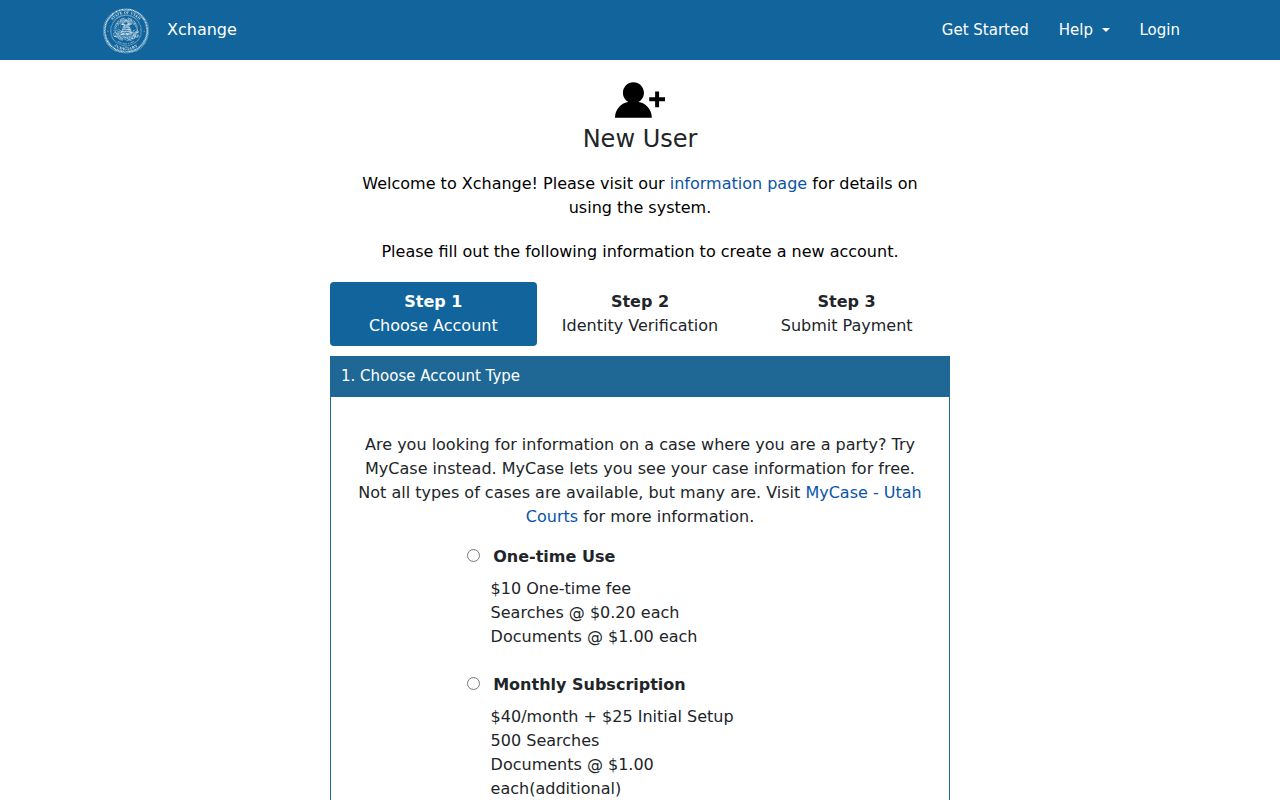
Live registration showed a $10 guest credit, $0.20 per search, and $1 per document. A subscription has a $25 setup charge and costs $40 per month for 500 searches, though Utah documentation elsewhere lists $0.35 per search, so verify the checkout price.
Limits on St. George Court Records
A docket is the court’s event log for a case, while a disposition is the recorded outcome of a charge or claim. Neither term means every filed page is open. Adoption and expungement files are sealed. Juvenile matters stay off Xchange. Protective-order, divorce, guardianship, fee-waiver, victim, medical, and some temporary custody material may be private under Utah court rules.
For court records, the official request form asks for the judiciary and address, an exact description, inspection or copy choice, requester contacts, and any grounds to see nonpublic material. Inspection is free. Listed charges include paper copies at $0.25 per page, electronic delivery at $5 for the first ten pages and $0.50 after that, and certification at $4 per document plus $0.50 per page. A GRAMA request cannot override a court seal or legal classification.
The Utah Archives Fifth District guide traces older Washington County court holdings.
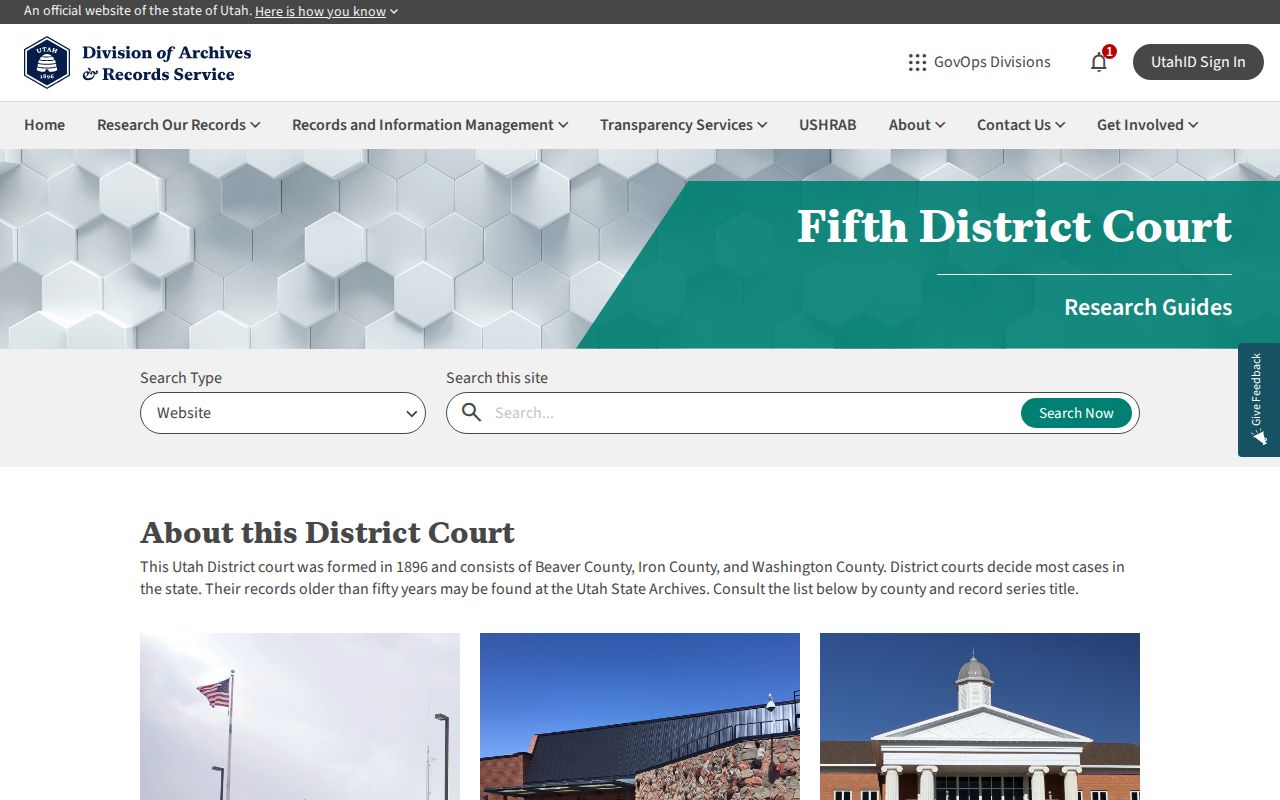
Fifth District records more than 50 years old may have transferred to the Archives, including civil, criminal, and probate indexes that identify parties, heirs, and estate representatives.
St. George Vital Records Access
Current certificates and historical indexes follow different rules. Utah Vital Records maintains births and deaths from 1905 forward and marriage or divorce abstracts chiefly from 1978 through 2010. Births open to public historical research after 100 years, deaths after 50 years, and marriage or divorce records after 75 years. Before those thresholds, Utah Code Section 26B-8-125 limits certified copies to qualified people with proof of identity and relationship.
The Utah certificate-ordering service describes online, mail, and local in-person routes.
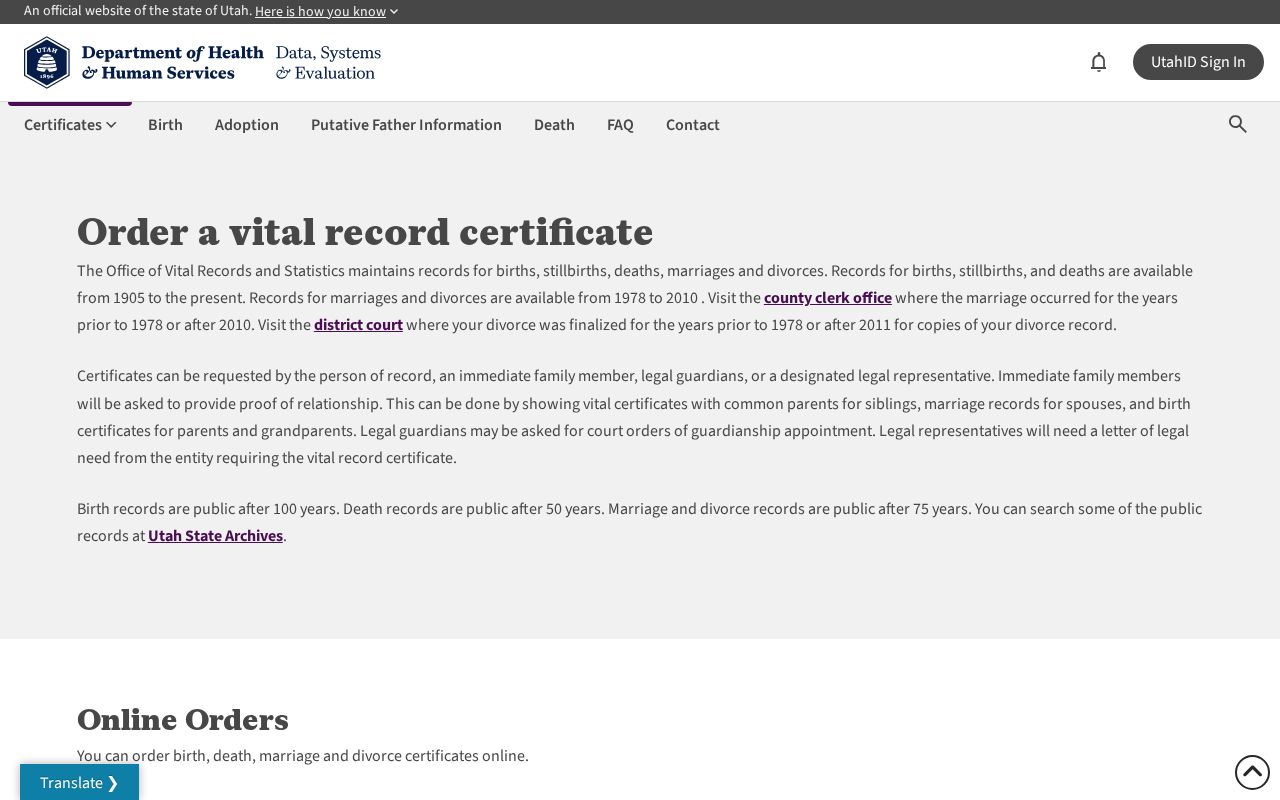
Southwest Utah Public Health provides the local counter option. State mail orders need the form, payment, ID copy, and relationship proof; baseline mail time is at least three weeks, while a June 2026 notice reported about a six-week backlog.
Note: A failed certificate search still incurs the order fee, so verify the record type, date range, and correct issuing office first.
Historical St. George Vital Records
The Washington County historical vital collection supplies a separate free route for early family research.
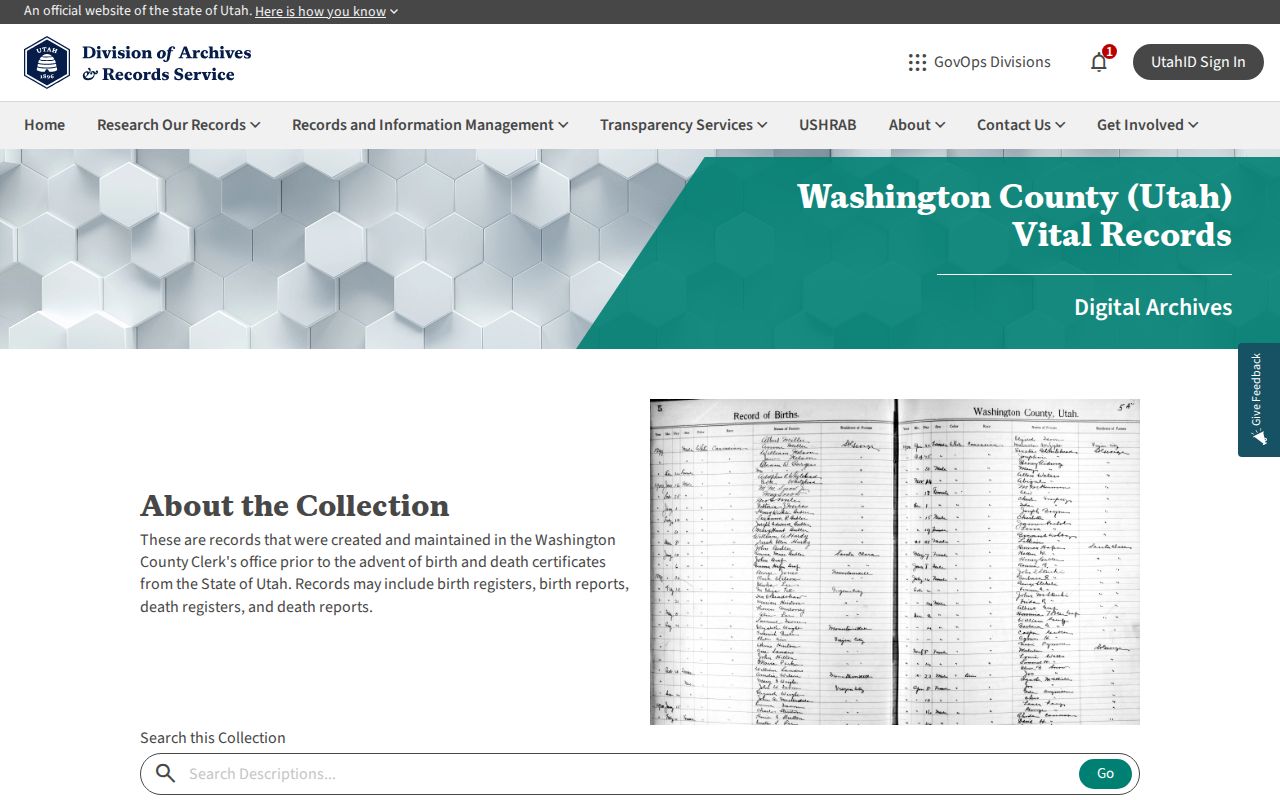
Digitized birth registers from 1898 through 1905 may show the child, event date, parents, residence, sex, and historical race or color label. Search both the child and the parents, then open the image to confirm the index.
St. George Public Records Desks
St. George is the county seat, and several Washington County custodians work at 111 East Tabernacle. Their shared address does not merge their duties. Send title questions to the Recorder, value questions to the Assessor, tax questions to the Treasurer, and county administration or marriage questions to the Clerk/Auditor. City records remain with St. George departments.
Washington County Recorder/Surveyor
111 East Tabernacle
St. George, UT 84770
(435) 301-7680
Washington County Clerk/Auditor
111 East Tabernacle
St. George, UT 84770
(435) 301-7220
Marriage, elections, and county administration
Washington County Assessor
111 East Tabernacle
St. George, UT 84770
(435) 301-7020
Current value and property characteristics
Washington County Records Officer
111 East Tabernacle
St. George, UT 84770-3443
(435) 301-7233
The St. George city government portal links departments, forms, and applications for municipal material. No unified city employee or municipal case index was verified. Ask the department that created the record, then use GRAMA for a non-indexed city file.
File a St. George GRAMA Request
Utah Code Title 63G, Chapter 2 creates the request process. Send the request to the entity that keeps the record, not automatically to the city or Utah State Archives. Under Section 63G-2-204, identify the record with reasonable detail and give your name, mailing address, daytime phone number, and an email address when available and willing. Requests may go through the Open Records Portal, email, fax, mail, or an office counter.
- Identify the St. George, Washington County, court, or state custodian by the function that created and keeps the file.
- Check its public index first. Save the exact name, date band, parcel, instrument, incident, or case number that narrows the search.
- Describe the record and preferred format. Choose inspection or copies, state any legal basis for nonpublic access, and set a cost ceiling if needed.
- Submit through the office’s accepted channel. Keep the sent request, confirmation, and any response or fee estimate.
- If access is denied, read the classification and appeal notice. Narrowing an unclear request can also resolve delay or cost.
The Utah Open Records Portal provides the state submission gateway and records-officer search.
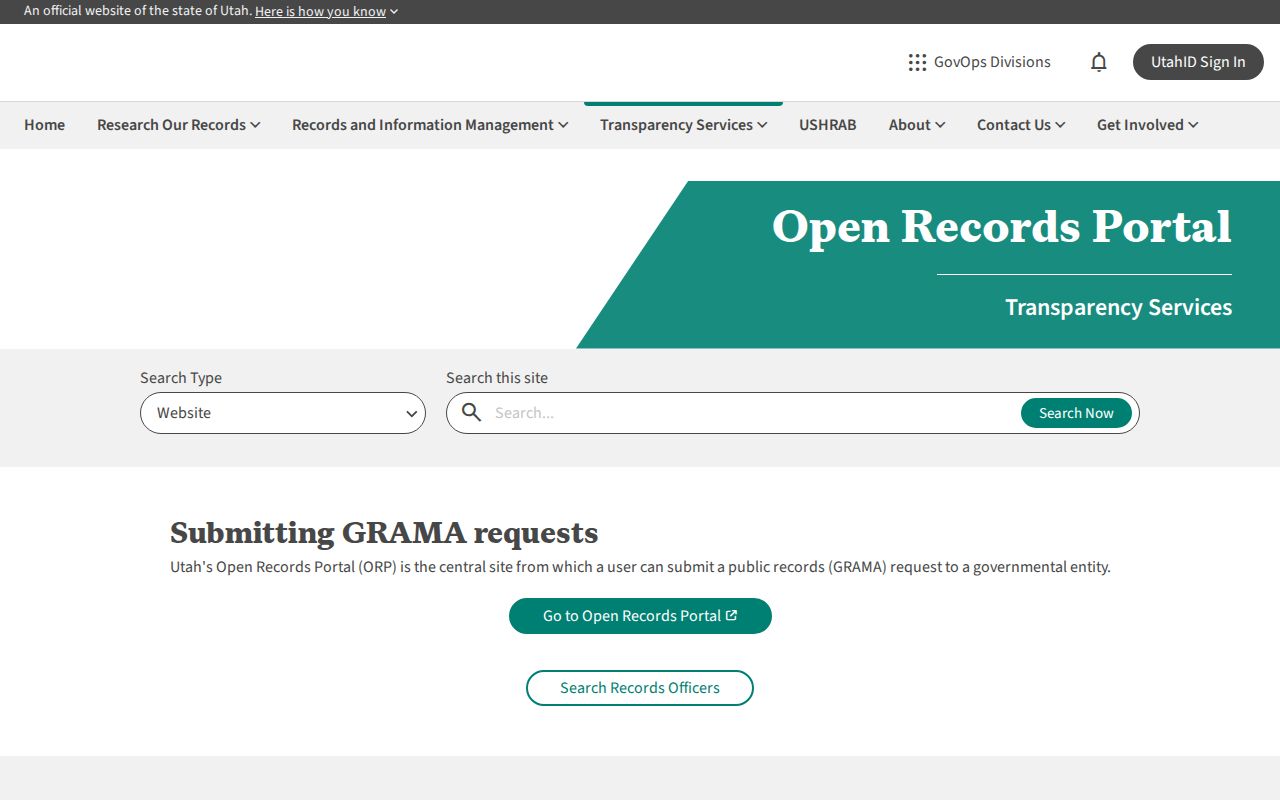
The form asks for contact details, a specific description, inspection or copy preference, a possible cost cap, fee-waiver grounds, nonpublic-access authority, and support for an expedited request.
Lawful personal use. Public access never permits stalking, harassment, threats, identity theft, or exposure of an address protected by Utah law.
St. George Records Fees and Appeals
GRAMA allows actual duplication costs and, when permitted, staff time at the rate of the lowest-paid qualified employee. The first quarter-hour is generally free. An agency may require prepayment when estimated charges exceed $50 or when prior fees remain unpaid. Inspection alone is not billable, and review of a record’s classification is not a copy fee.
A requester may seek a waiver when release chiefly benefits the public, when the requester is the record subject or an authorized representative, or when the record directly affects legal rights and the requester cannot pay. An ordinary answer is due as soon as reasonably possible and no later than ten business days. A supported public-benefit expedited request is generally due within five business days. Extraordinary circumstances can extend those periods.
A denial may be appealed to the entity’s chief administrative officer within 30 days under Section 63G-2-401. Later paths include the State Records Committee or district court. Nonresponse after the applicable period counts as a denial. A 2024 Washington County appeal over petition signatures illustrates a key point: a record can exist and be available for inspection while a specific field remains protected from copying.
St. George Custody Record Systems
County jail, state corrections, and federal custody are separate systems. The Washington County Sheriff publishes a current alphabetical roster with inmate number, name, and incarceration time, plus five-day bookings with arrest, agency, charge, statute, court, custody, and payment fields. The roster has no search filter or history. For an older or absent sheriff file, contact the records unit or use the sheriff’s GRAMA channel.
The Utah Department of Corrections lookup covers sentenced people and those on probation or parole. It does not include unsentenced county detainees, which is why the St. George-area jail roster remains a necessary companion. Federal custody uses the Bureau of Prisons locator. VINE offers free round-the-clock status notices by name or offender number, but it should not be the sole source for a safety decision.
Washington County removed booking mugshots under Utah HB 228 while retaining text fields. That unusual split prevents a false assumption that a record vanished simply because no image appears. Booking data reflects an allegation and custody event, not a conviction.
St. George Records Changes in 2026
Current costs deserve a date check. Washington County raised its recording charge to $45 per document and its redaction charge to $10 effective May 6, 2026. Boundary surveys moved to online-only filing on January 1, with a $30 charge plus a transaction fee. These are filing costs, not a verified price for every recorder copy or image, so confirm the current schedule before ordering.
Utah vital-record fees changed July 1, 2026. The initial listed fees are $25 for a birth certificate, $35 for a death certificate, and $25 for a marriage or divorce abstract. An added copy of the same record costs $10. Older forms may still show prior prices. The live fee schedule controls, and identity checks, convenience services, shipping, or expedited processing can add separate charges.
Electronic access is still only part of St. George record keeping. Utah law now expressly permits electronic receipt, indexing, storage, archiving, and transmission while preserving authorized paper recording. Use the portal when it fits, but keep the office counter, telephone, mail, courthouse terminal, written request, and Archives reference service in the fallback chain.